
Quantum Whispers in Water:
How homoeopathy might really work...
Dear readers, in recent years, quantum physics has increasingly permeated the fields of biology and medicine, offering fresh perspectives on ancient healing practices such as homeopathy. As a biophysicist with decades of experience in charge dynamics and the therapeutic applications of chlorine dioxide solution (CDS), I find it particularly intriguing to explore how homeopathy might operate at a quantum level that is not yet understood by the medical community.
This hypothesis, which I’ve recently discussed in depth with a skeptical German colleague (Thank you for your input), posits that homeopathic preparations, even at extreme dilutions, imprint a specific “information” or vibrational pattern onto the solvent—typically water—through quantum phenomena like coherence, spin states, and superposition, rather than relying on classical material effects. This approach challenges skeptical chemists and traditional pharmacologists, yet it is supported by quantum field theory and emerging biophysical models. I enjoy discussing these and other topics with my dear colleague and friend, Dr. Ing. M. Ramirez, the director of our foundation, who holds three PhDs in Physics, Quantum Physics, and Biomolecular Medicine, whenever I am in Mexico in our Foundation. I learned a lot from him—a true genius who is able to ground my wild ideas.
Thank you, my friend. :)
Allow me to guide you through this idea step by step, as a friendly yet professional teacher would, blending accessibility with academic rigor to make it comprehensible for both laypersons and experts. We’ll cover the core hypothesis, a practical example with Arnica montana, critical limitations and counterarguments, detailed explanations of coherent domains, quantum biology in cells, and quantum tunneling in enzymes, all woven into a narrative that invites reflection on a potential paradigm shift in healing.
The working hypothesis begins with the assumption that potentization—the process of sequential dilution and succussion—creates cluster structures or domains in water that assume specific vibrational states or quantum coherences at the molecular level. Imagine water not as a mere passive medium but as a highly structured network of hydrogen bonds and dipoles capable of collective excitations. During succussion, minimal energy inputs could align spin states of water molecules or protons in the hydrogen-bond network, leading to long-range order or persistent quantum coherence, even when no molecules of the original substance remain detectable beyond the Avogadro limit (around C12 or C24 dilutions). This “information” transfer might resemble quantum information processing, where non-local effects play a role. Academically formulated, the dynamics follow the time-dependent Schrödinger equation:

with the Hamiltonian H^ incorporating molecular kinetics, dipole-dipole interactions, and quantized radiation fields from quantum electrodynamics (QED). At sufficient density and polarization, a fraction of water molecules could condense into a coherent state, akin to a Bose-Einstein-like behavior for collective modes, described by a macroscopic wave function with an order parameter ϕ. The coherence lifetime depends on the decoherence rate GammaT , given
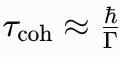
influenced by thermal fluctuations, collisions, and damping. Speculatively, entanglement between proton or electron spins in the network could store frequency patterns, modeled by an effective Heisenberg Hamiltonian:

enabling resonance with biological systems like biomolecules through phenomena similar to Förster resonance or phonon-polariton coupling. Experimental probes include NMR for spin-flip processes, Raman spectroscopy for vibrational relaxations, and femtosecond infrared (fs-IR) for coherence lifetimes, though the persistence of such states in liquid water remains debated due to rapid thermal disruptions.
To illustrate, let’s apply this to Arnica montana, a classic homeopathic remedy for trauma and inflammation. Hypothetically, succussion induces an effective spin coupling
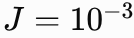
eV in the water’s proton network via the Heisenberg model. For a simple two-spin system, the eigenvalues are −J-J−J (triply degenerate) and +3J+3J+3J, favoring ferromagnetic alignment and potentially serving as a basis for stable information storage. The time evolution of an entangled Bell state under the Schrödinger equation yields stable expectation values, such as
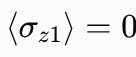
over timescales up to 10/J. However, at room temperature (300 K), thermal decoherence limits this to about 25 femtoseconds), as approximated by τcoh≈ℏ/(kT)\tau_. This brief window might still suffice to trigger biological resonances, such as modulating cellular responses to injury, but it underscores the speculative nature and the need for validation through techniques like nuclear magnetic resonance (NMR) spectroscopy on potentized samples.
Critics, particularly from chemistry backgrounds, rightly point out central weaknesses: the intrinsically short decoherence times in liquid water at room temperature, typically
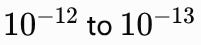
seconds for vibrational modes, as evidenced by fs-IR and 2D-IR studies. Thermal fluctuations rapidly dismantle quantum coherence, making metastable states plausible only in highly structured interfaces or at cryogenic temperatures. NMR relaxation times (T₁ ≈ 2–4 seconds, T₂ ≈ 1–3 seconds in pure water) do indicate prolonged spin coherence, but these pertain to thermally equilibrated states, not substance-induced entanglement. Similarly, Raman and terahertz (THz) spectroscopy reveal cluster dynamics yet no stable, information-specific long-term order beyond picoseconds. These are valid concerns, as they align with classical thermodynamics dominating in warm, wet environments. However, counterarguments from QED-based models by researchers like Emilio Del Giudice, Giuseppe Preparata, and Giuseppe Vitiello suggest that water can form coherent domains through interactions with the electromagnetic vacuum field. At critical densities and under subtle energies—like those from succussion—molecules spontaneously break symmetry, condensing into a coherent ground state that stabilizes against thermal noise. These domains, extending over micrometers, exhibit phase-locked oscillations of electrons between ground and excited states at around 0.26 eV, creating a denser phase akin to “exclusion zones” (EZs) that repel ions and particles. Such structures could persist for hundreds of nanoseconds, even at physiological temperatures, as observed in stable scaffolds resistant to air and water, providing a plausible mechanism for information storage in homeopathy. Quantum biology further bolsters this, with coherent states in photosynthetic complexes lasting at least 300 femtoseconds at room temperature—sufficient for biological impacts—and studies showing extended echo signals in entangled multiexcitons, hinting at substance-specific entanglement beyond equilibrium.
Delving deeper into coherent domains, these represent a cornerstone of this quantum view of water, pioneered by Del Giudice and colleagues. Picture expansive regions, from micrometers to nearly millimeters, where water molecules oscillate collectively and in phase, much like photons in a laser or atoms in a Bose-Einstein condensate, fostering macroscopic quantum coherence. This arises from QED interactions: the quantized electromagnetic vacuum couples with water’s dipoles, leading to spontaneous symmetry breaking and a coherent phase at critical thresholds. Within these domains, electrons synchronize between states, generating long-range order that partially overcomes thermal chaos, as the coherent phase is denser and acts like an EZ, excluding solutes and enabling potential information encoding via specific vibrational patterns.
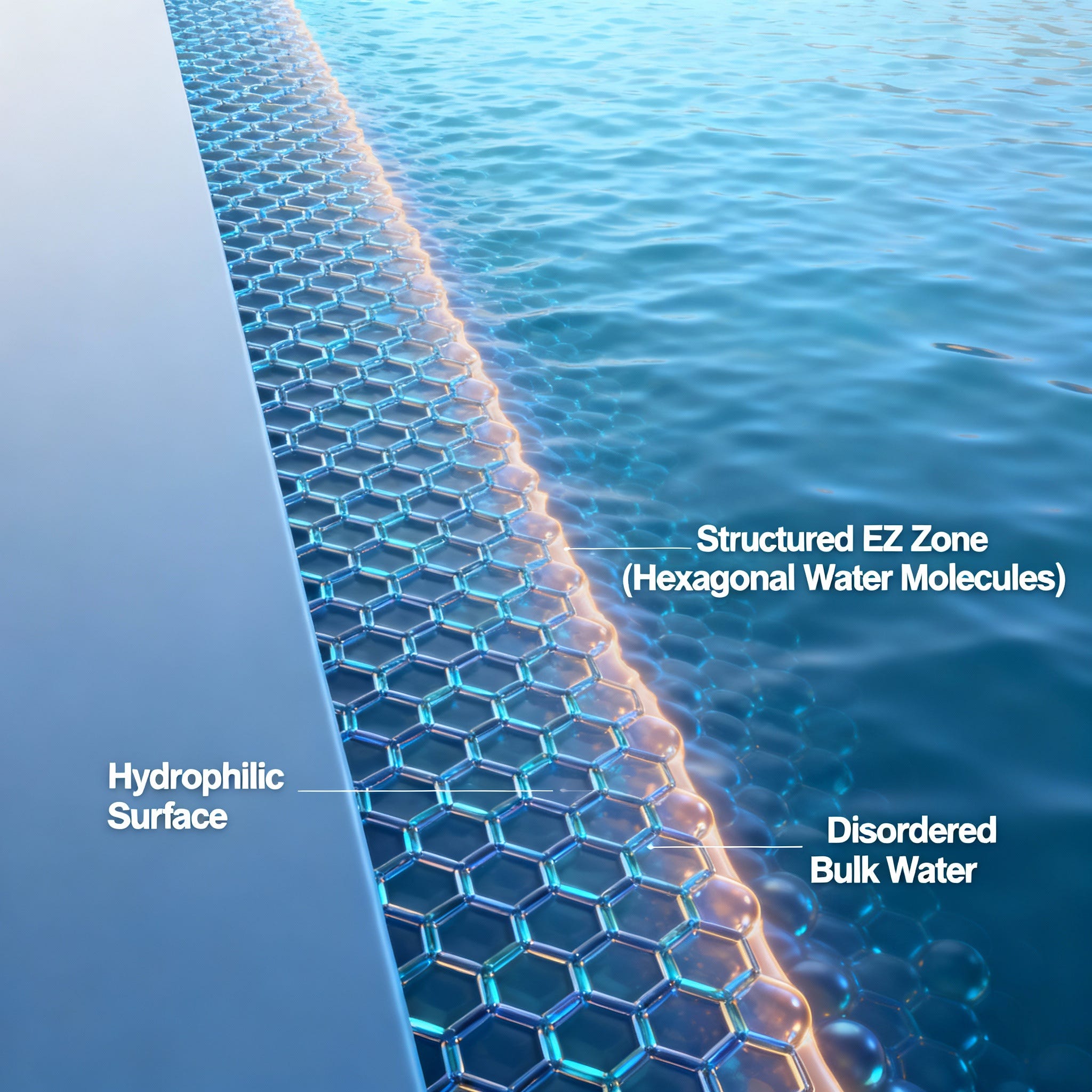
While critics question their lifetime at ambient conditions—often nanoseconds to picoseconds—experimental and expensive methods like ultrafast spectroscopy and NMR are essential for true verification, positioning water as an active, quantum-structured medium with implications for medicine, including homeopathy’s purported effects.
This quantum lens extends to biology itself, where quantum biology investigates how principles like coherence, tunneling, and entanglement underpin cellular processes beyond classical physics. In cells, these effects optimize metabolism; for instance, in photosynthesis, electrons traverse protein complexes coherently, minimizing energy losses and enhancing efficiency. Spin resonances might alter cellular energy balances, while in the immune system, quantum mechanisms could facilitate cell-cell recognition or avian magnetoreception for navigation. Experiments with ultrafast spectroscopy confirm these persist at room temperature, countering decoherence critiques and revealing cells as quantum networks, which aligns with my work in electromolecular medicine—where biological function hinges on charge dynamics, and therapies like CDS restore depleted electron flows across diverse conditions.
Particularly compelling is quantum tunneling in enzymes, a mechanism allowing biological catalysts to bypass energy barriers that would be insurmountable classically. Here, particles like protons, hydrides, or electrons “tunnel” through potential walls due to their wave nature, dramatically accelerating reaction rates. Consider alcohol dehydrogenase’s hydride transfer: instead of surmounting a 20-30 kcal/mol activation energy, a proton tunnels with probability tied to its de Broglie wavelength
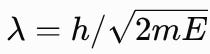
favoring lighter isotopes like hydrogen over deuterium and yielding kinetic isotope effects. Enzymatic vibrations optimize donor-acceptor distances to about 1 Å, enabling reactions at ambient temperatures otherwise impossible. This tunneling appears in photosynthesis, respiratory electron transport, and C-H bond activations, underscoring life’s quantum foundations and linking to electromolecular principles, where CDS aids disrupted charge flows. Evidence from enzyme kinetics and ultrafast spectroscopy might show vibrations promoting tunneling, though it remains an active research frontier.
In summary, this theoretical hypothesis reframes homeopathy as quantum information transfer via coherent water domains, resonating with quantum biology’s insights into cellular coherence and enzymatic tunneling. While experimental proof through ultrafast spectroscopy is pending, history teaches us not to dismiss speculative ideas prematurely—they often herald breakthroughs. As the inventor of CDS and advocate for electromolecular medicine, I see parallels in how charge dynamics underpin health, urging open dialogue to advance global well-being. If this sparks your interest, explore further through reliable sources like dioxipedia.com, and remember, for personalized advice, consult our professionals at the alkfoundation.com
We are living through a historic paradigm shift: from a purely biochemical medicine to an electromolecular medicine that finally acknowledges the electrical nature of life. The cell is not a chemical factory — it is a rechargeable battery. And when we learn to remove what discharges it and support what recharges it, health ceases to be a mystery and becomes an elegant, reproducible biophysical process.
... my new Book “Archived Health” is now available on Voedia.com
A happy new 2026 !

Dr. h.c. Andreas Ludwig Kalcker
"Greetings" 🤣
The message is screened on the sequel.
Time to lift up the veil of tears.
"🎶You spin me right round baby, right round...🎶"
From Micro to Macro, with the impossible numbers inbetween.
Happy New year guys,
you're work is "out of this world",
yet within my heart.
A big Cheers,
Michael.
What a beautiful, revealing, promising message 🤩...
Blessed be, Andreas Kalcker!